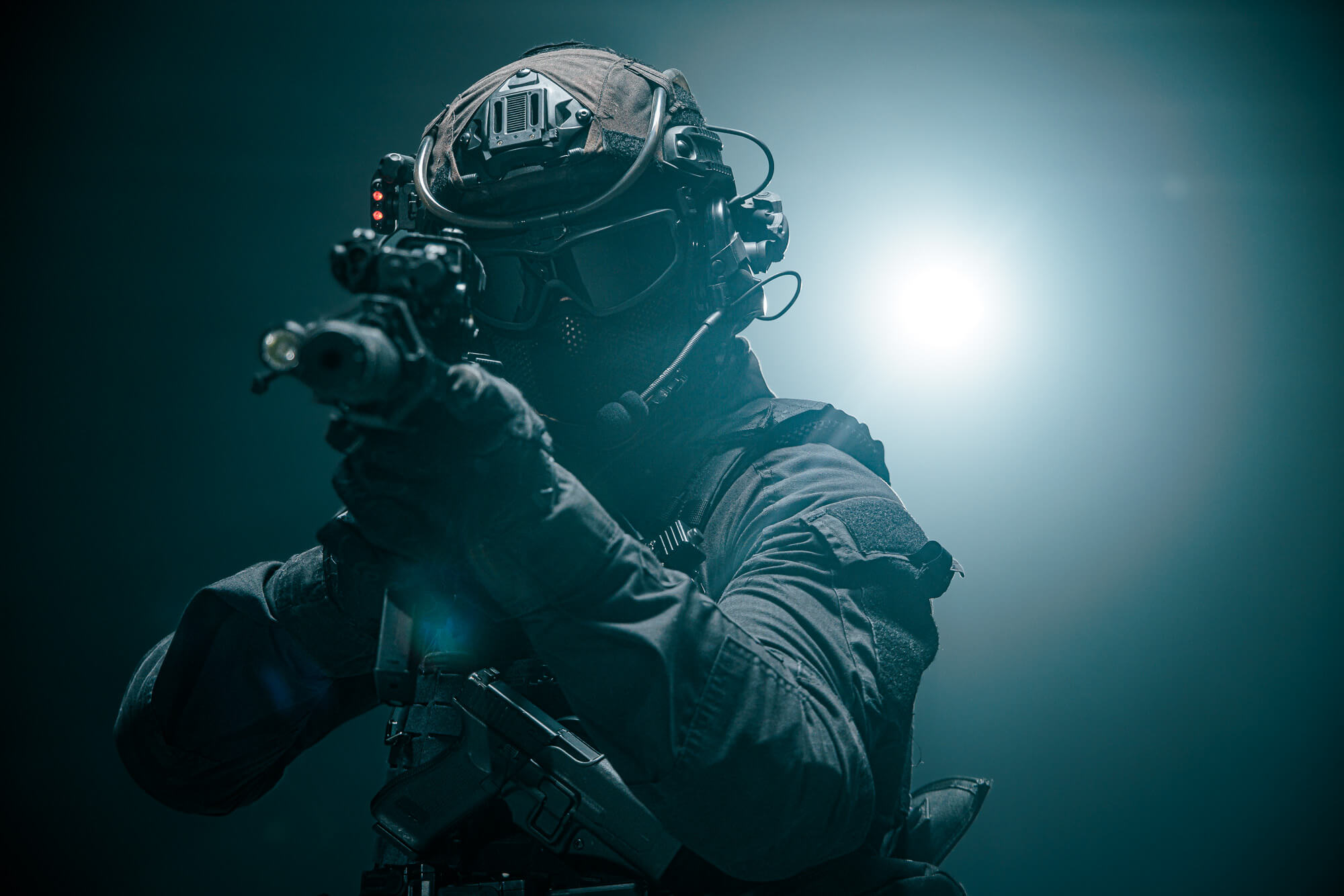
Editorial photography
297 Studio · Leganés · 2024
Black Ops
A conceptual photographic series produced by 297 Studio, translating tactical video-game codes into a dark, precise fiction charged with narrative tension.
Independent, unofficial concept project.
- Date and location
- Madrid · 2024
- Discipline
- Editorial photography
- Production
- 297 Studio · Leganés
- Nature
- Unofficial concept project
The case
Self-initiated project · Comando 297
A visual obsession turned into a world
Black Ops did not begin with a client brief, but with a visual obsession: seeing how far we could take a self-initiated shoot when the idea, atmosphere and execution followed a single direction.
Our starting point was the visual language of tactical video games, special-operations cinema and contemporary combat iconography. We did not want to reproduce a recognisable image, but to understand its visual logic and turn it into original fiction with an identity of its own.
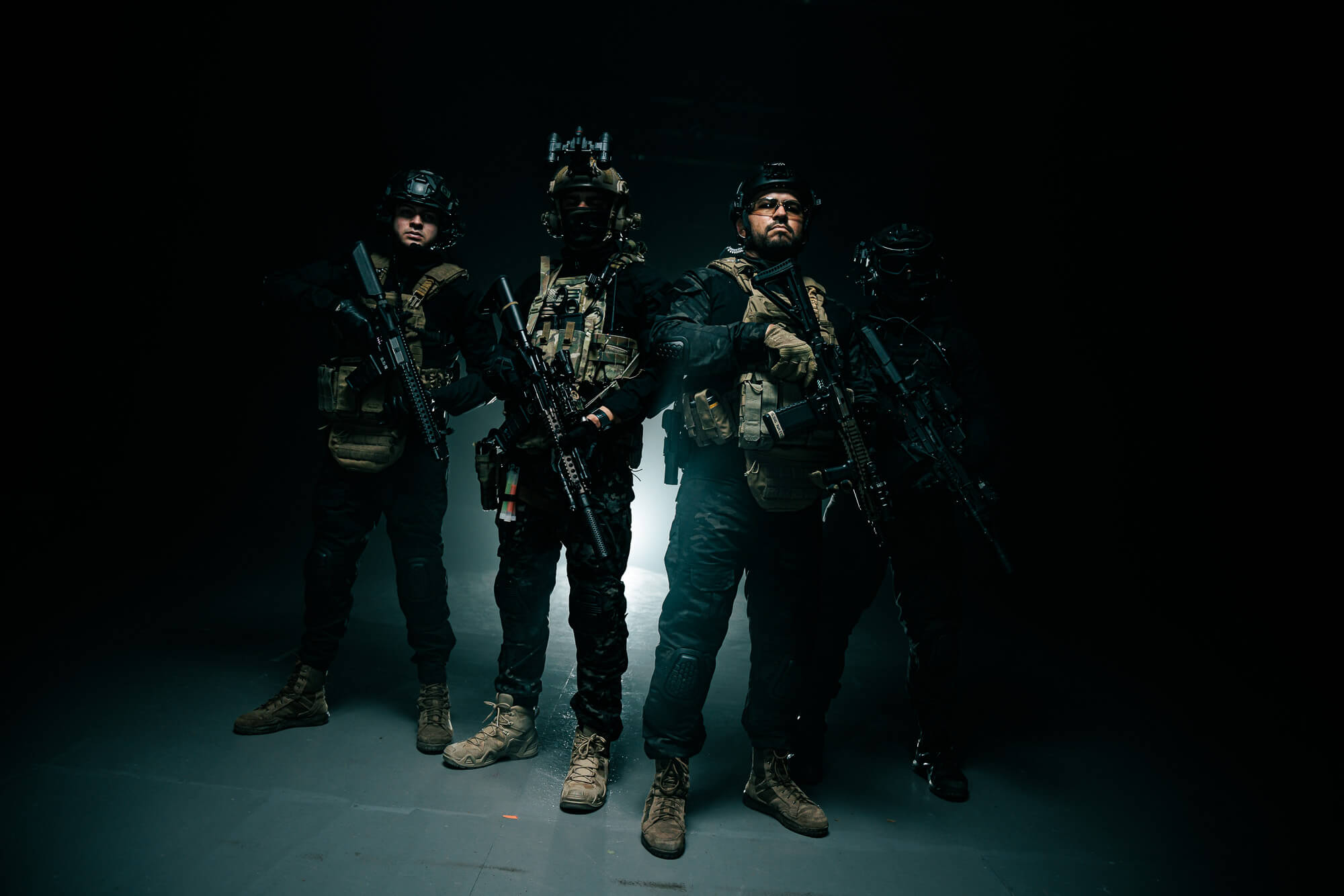
We worked with a group of former military personnel who enjoy airsoft. Their familiarity with equipment, posture and gesture brought a credibility that is difficult to manufacture in front of a camera. That became Comando 297: a fictional unit created as 297 Studio’s visual laboratory.
- Starting point
- A recognisable visual language that needed to become an original fictional world.
- Decision
- Build the series through atmosphere, gesture and visual continuity.
- Prueba
- Group scenes, portraits and action form chapters of the same world.
02 / The challenge
Building tension without turning it into costume
The atmosphere had to tell the story of the operation before any text did.
The challenge was not to photograph uniforms, replicas or action poses. Each image had to suggest that something was about to happen and sustain that tension without becoming decorative, caricatured or contrived.
We needed a cinematic setting where threat, precision and adrenaline could be felt without an explicit story. The staging had to seem part of a larger operation, rather than a collection of isolated portraits.
That balance required precise control over gesture, framing and light. Credibility depended on getting every element to tell the same story, rather than adding more of them.
03 / Visual direction
Light that reveals rather than explains
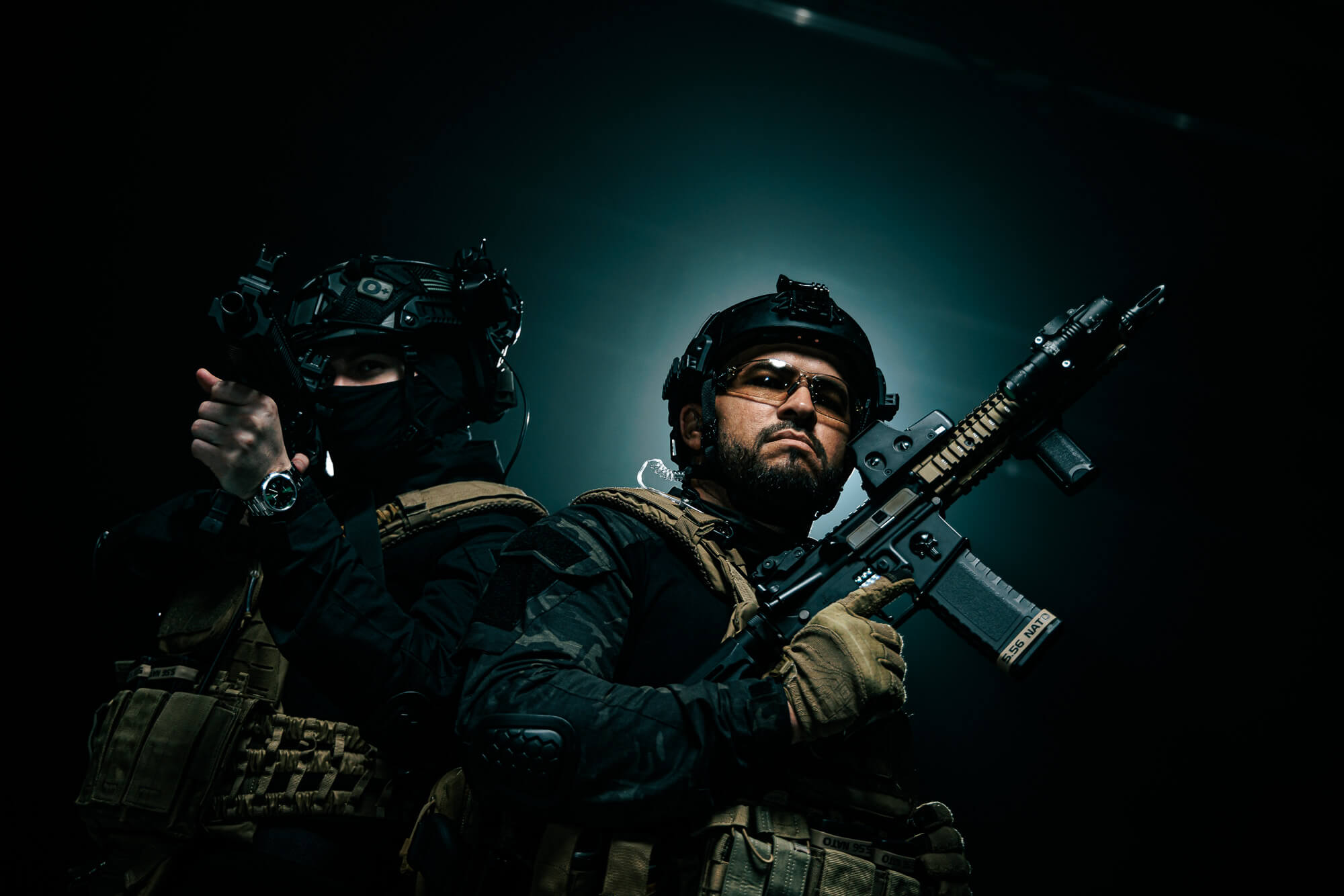
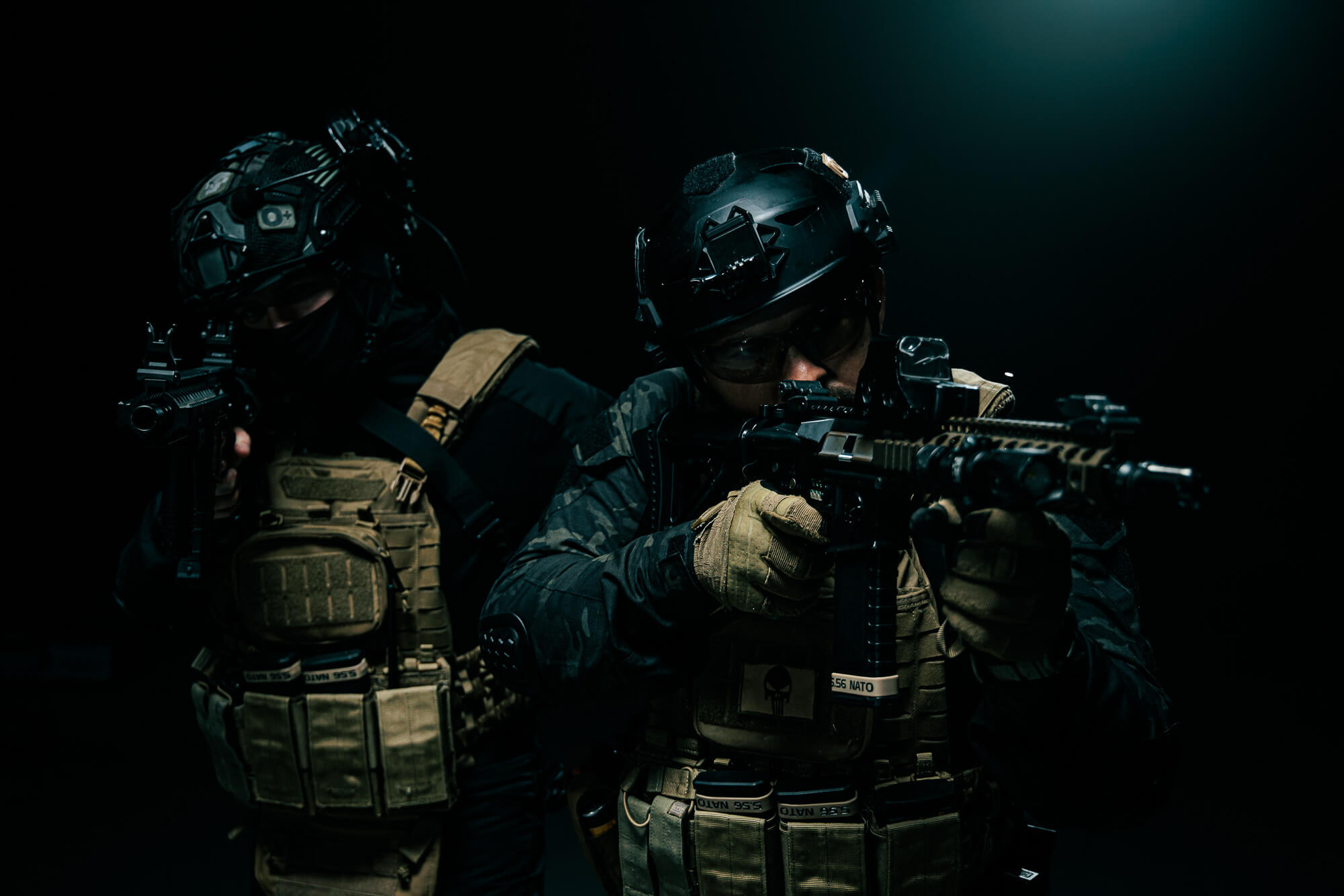
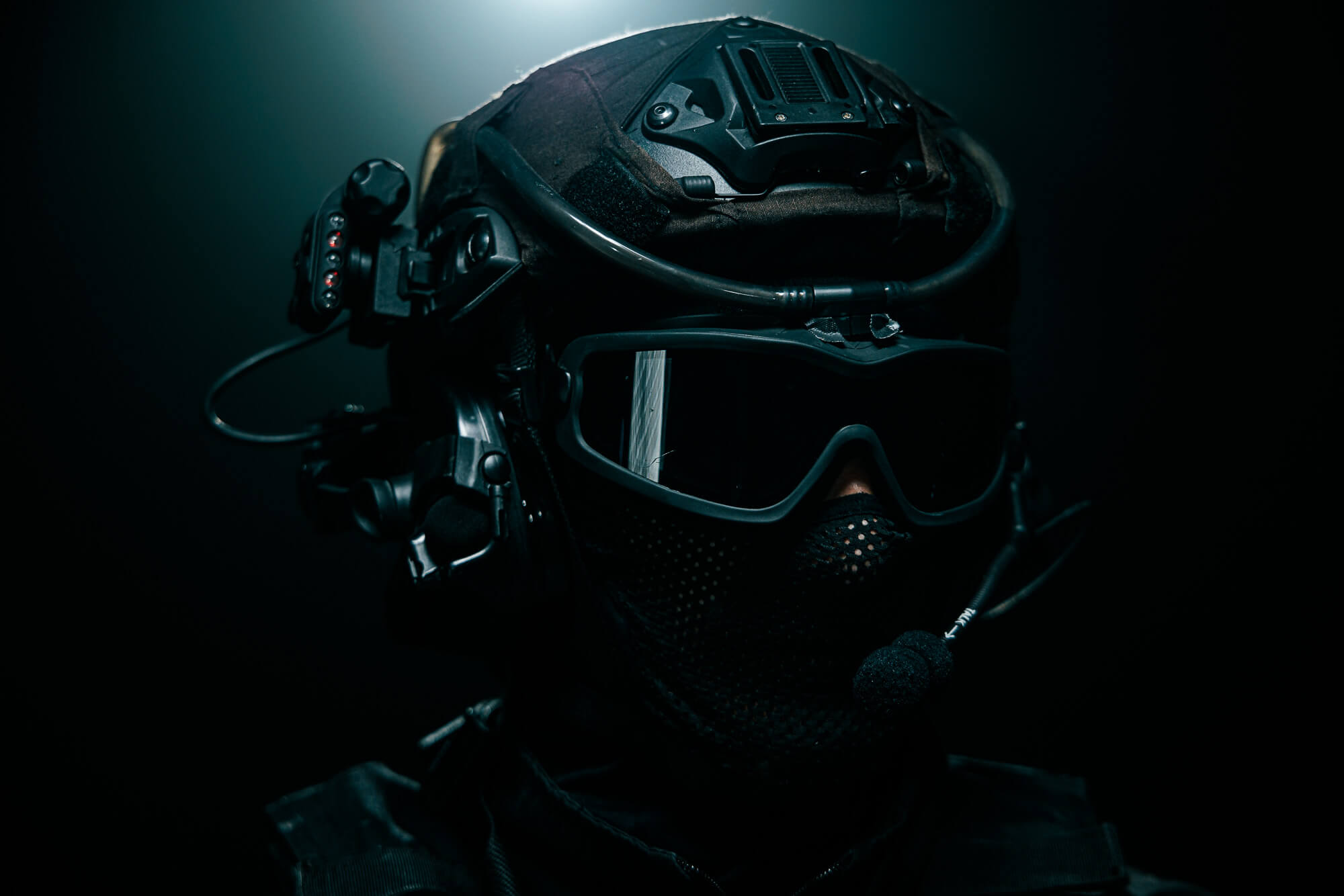
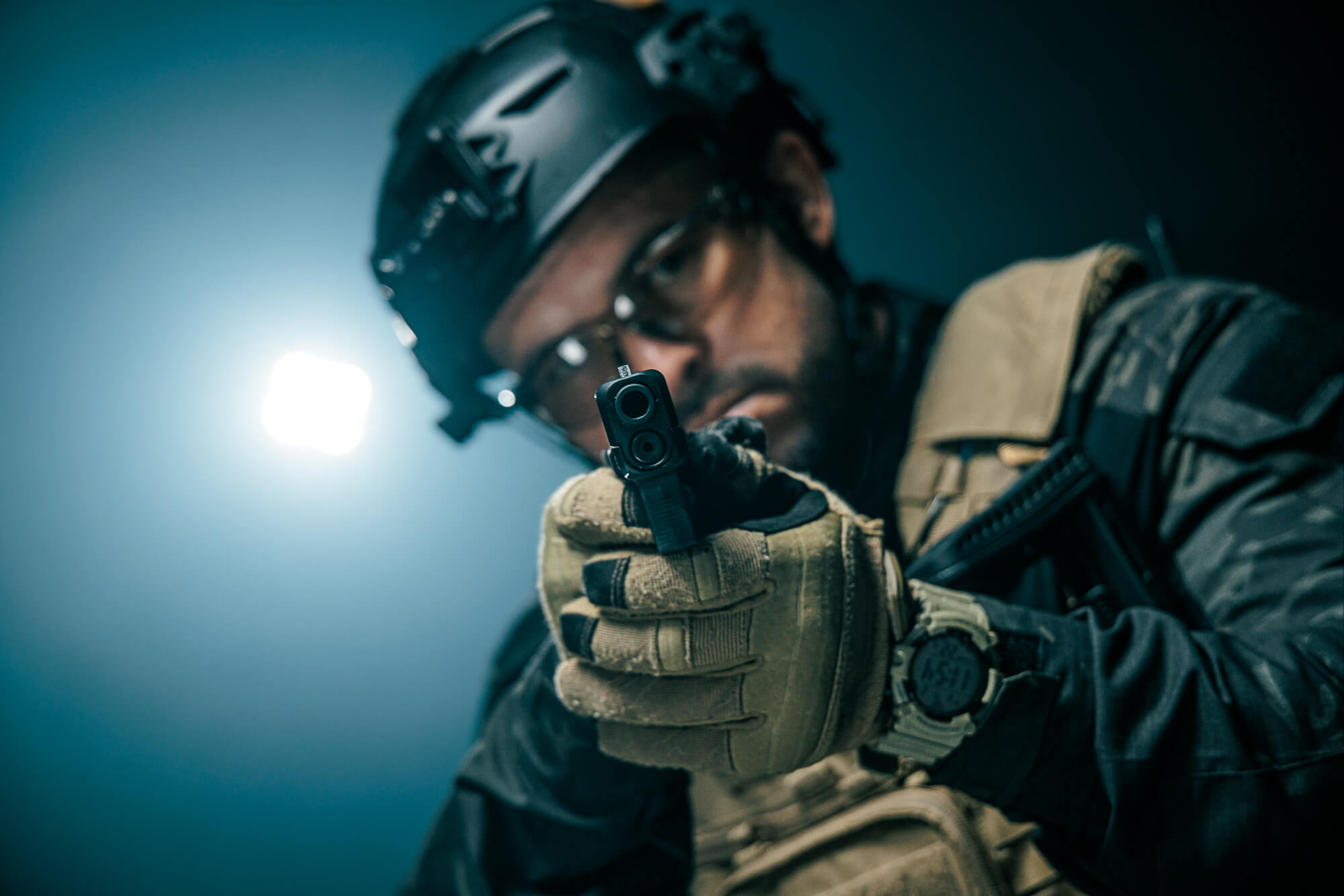
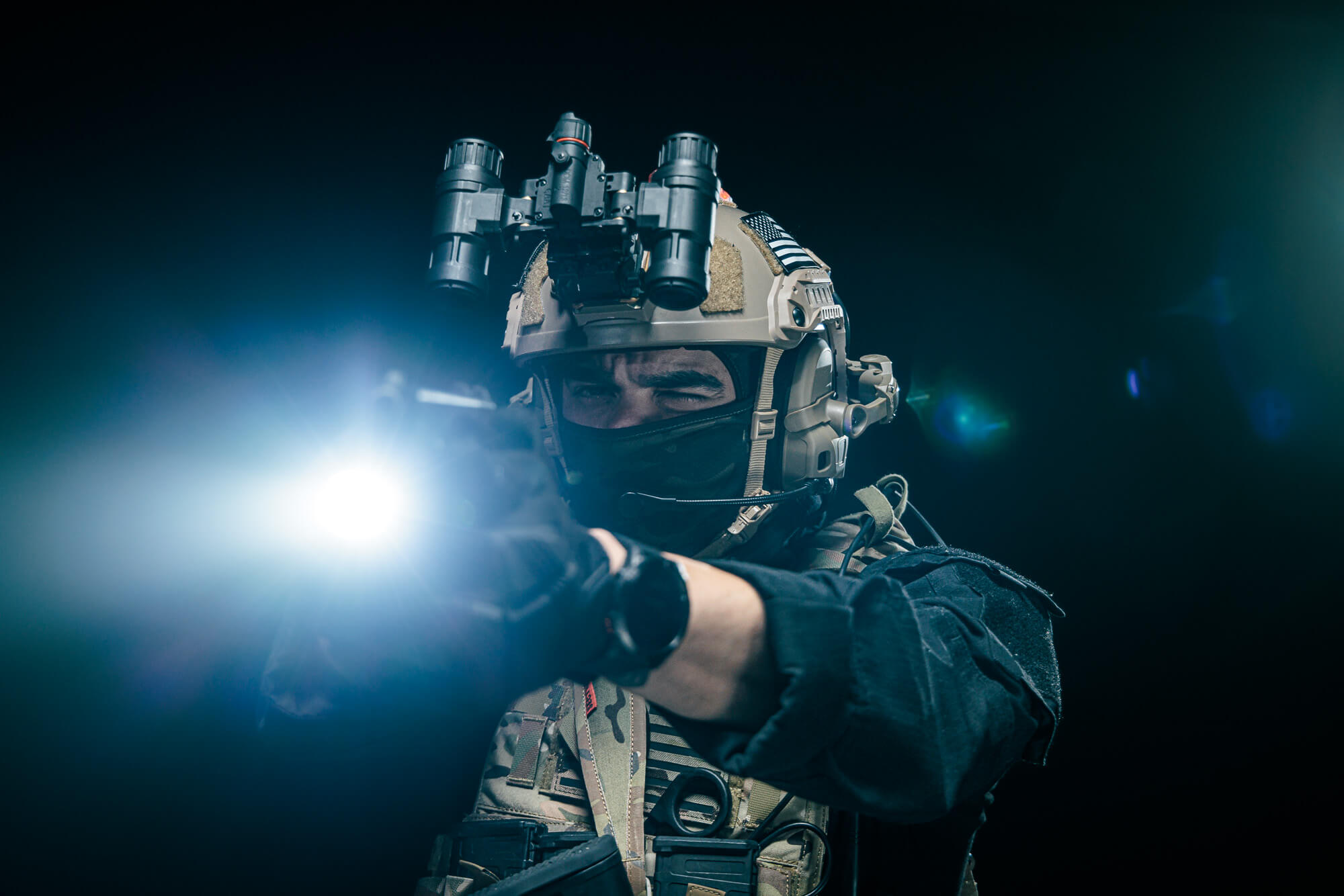
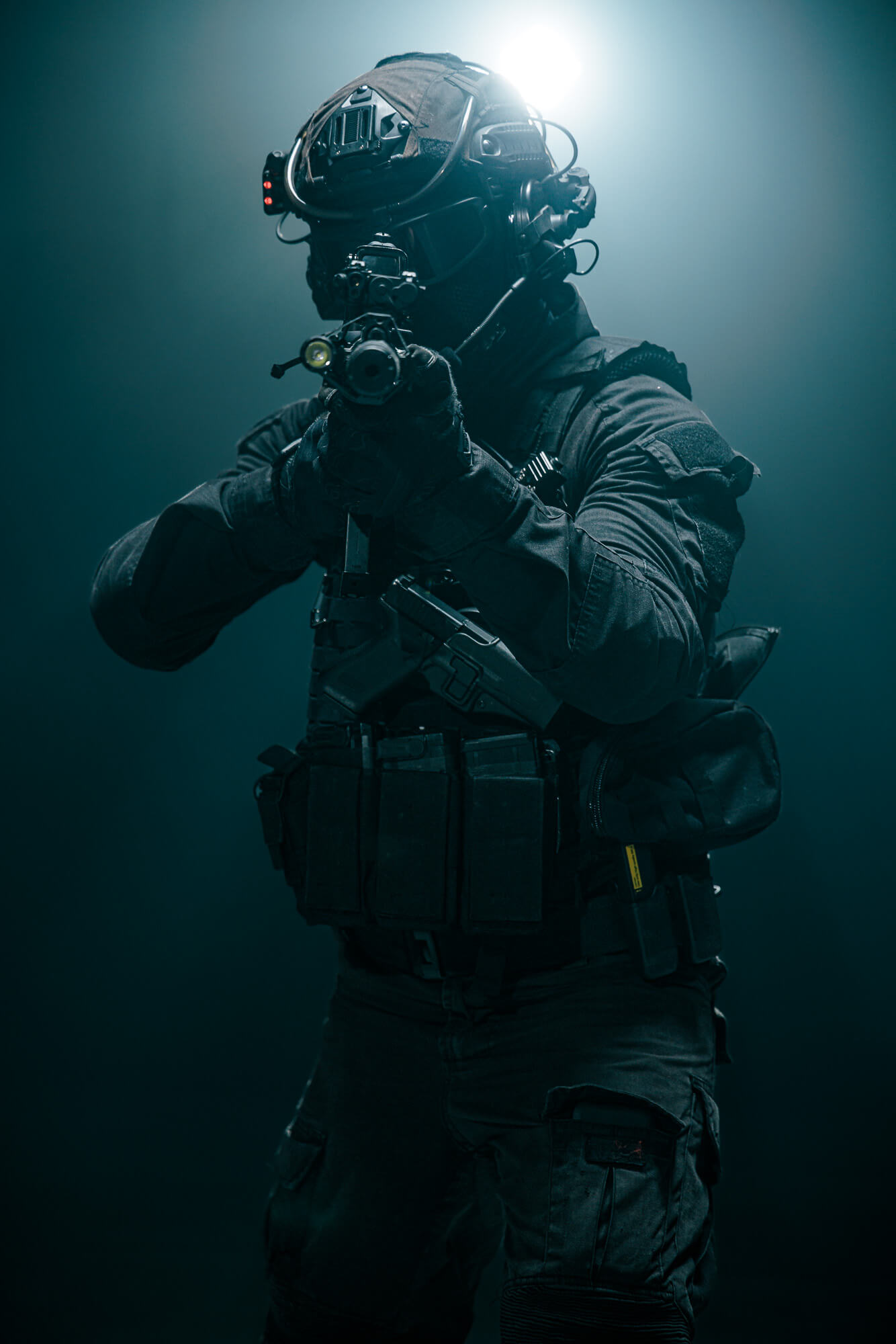
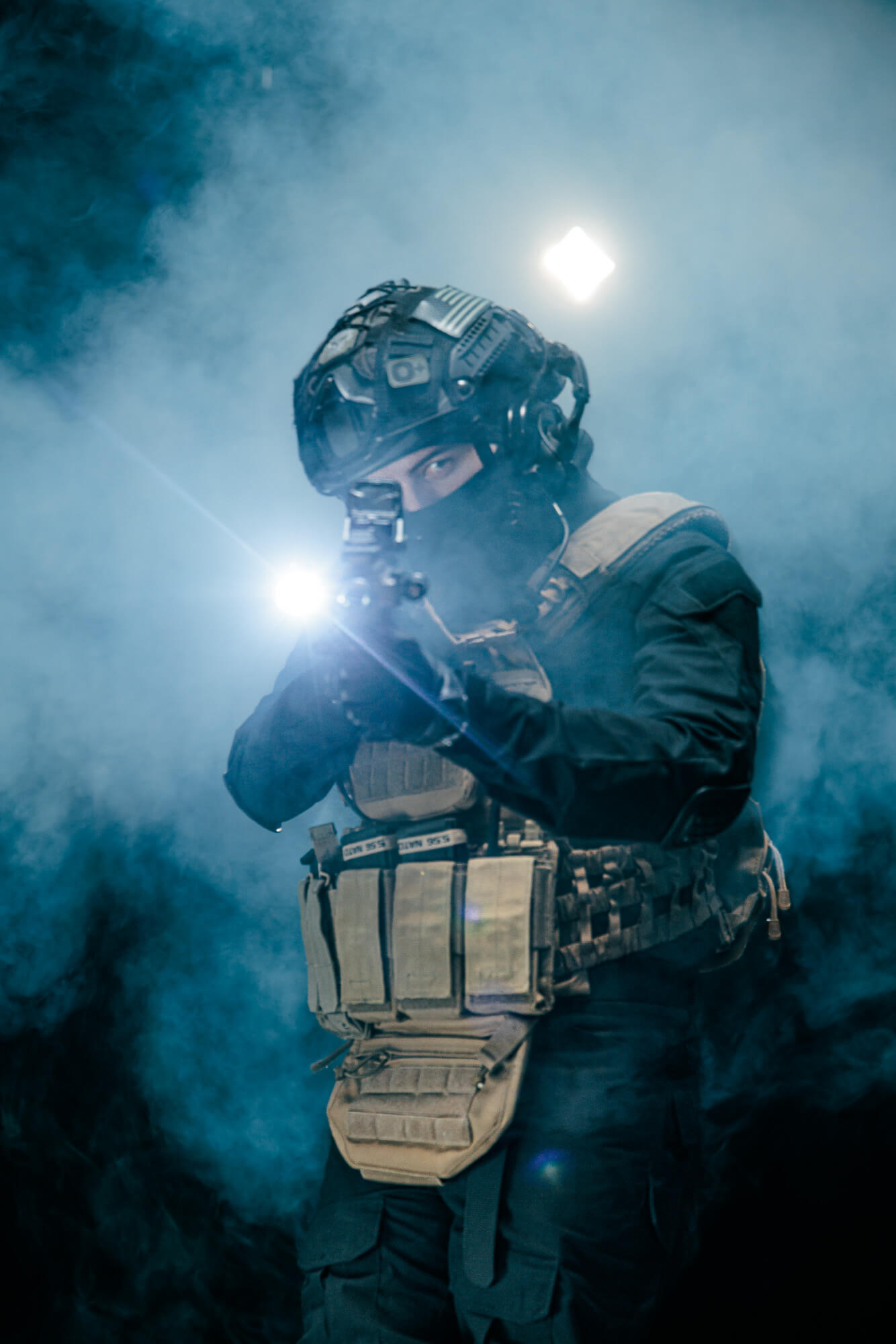
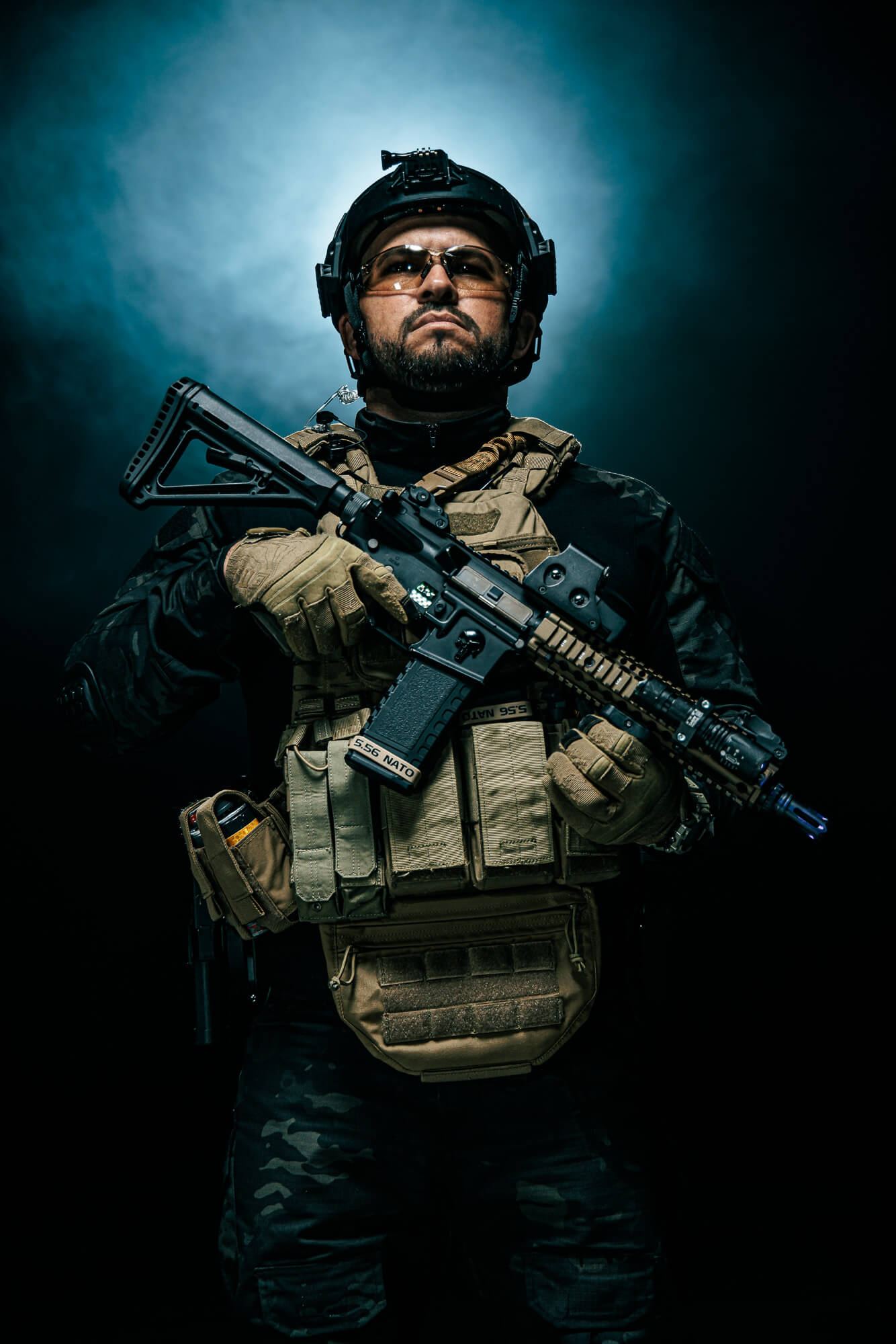
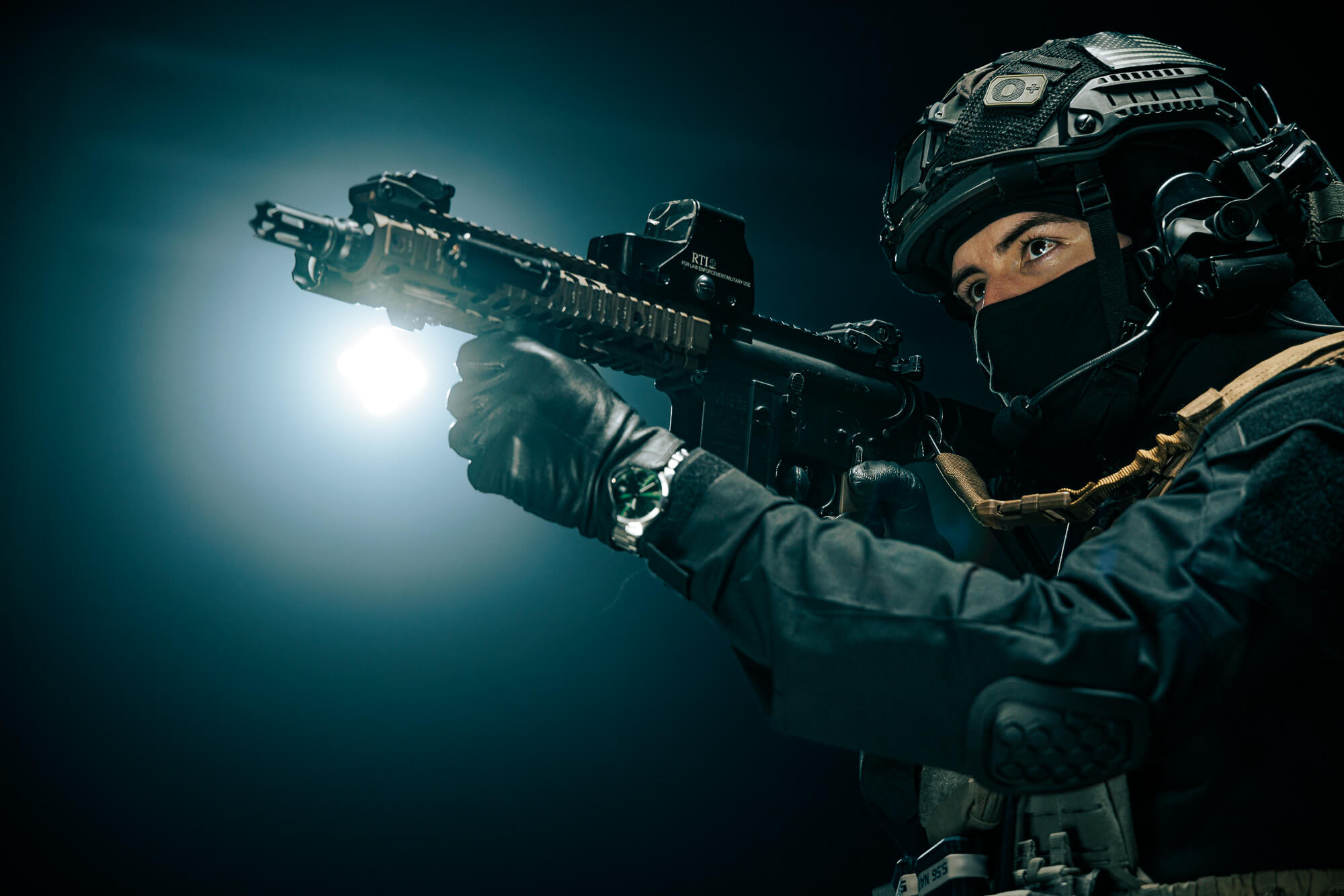
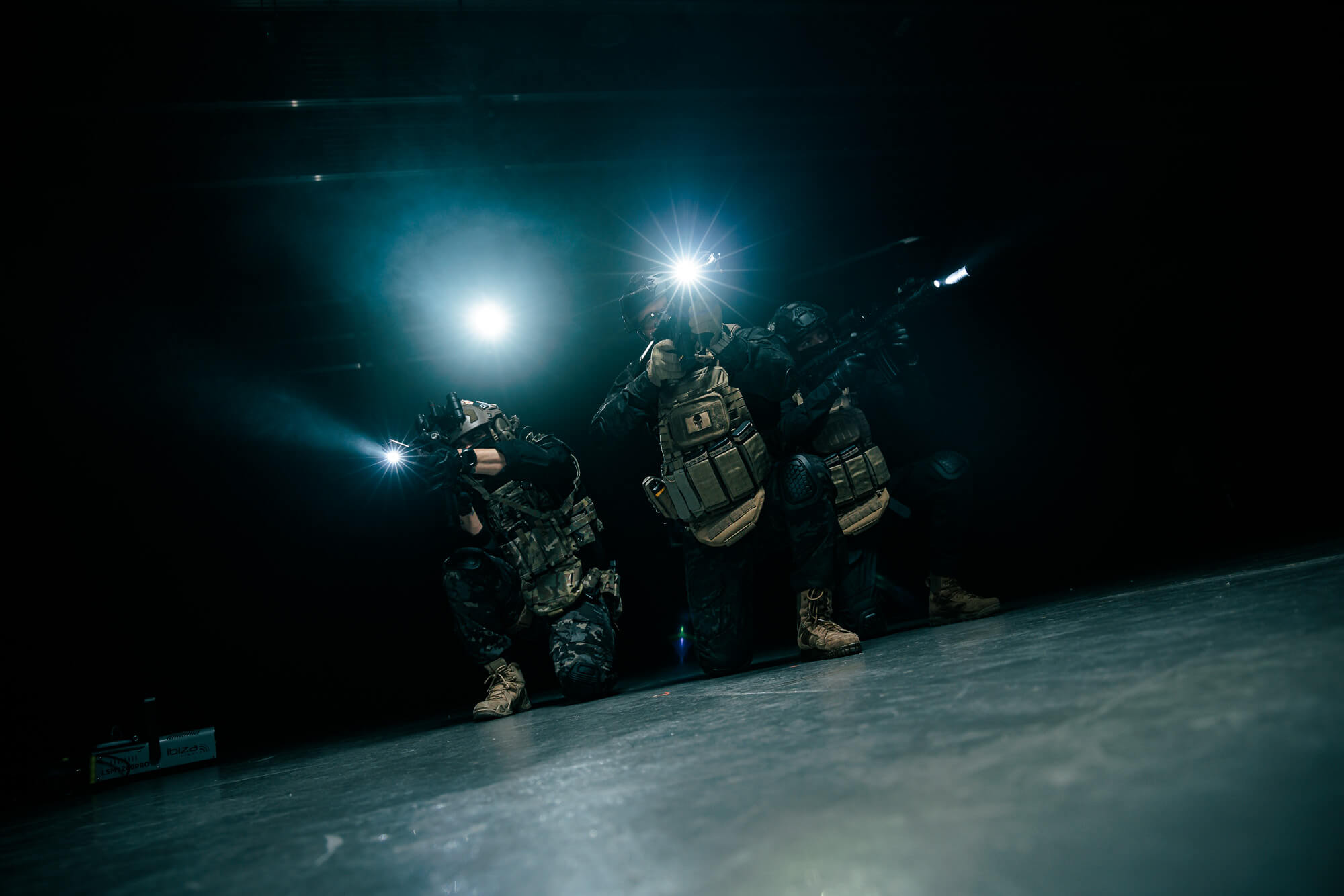
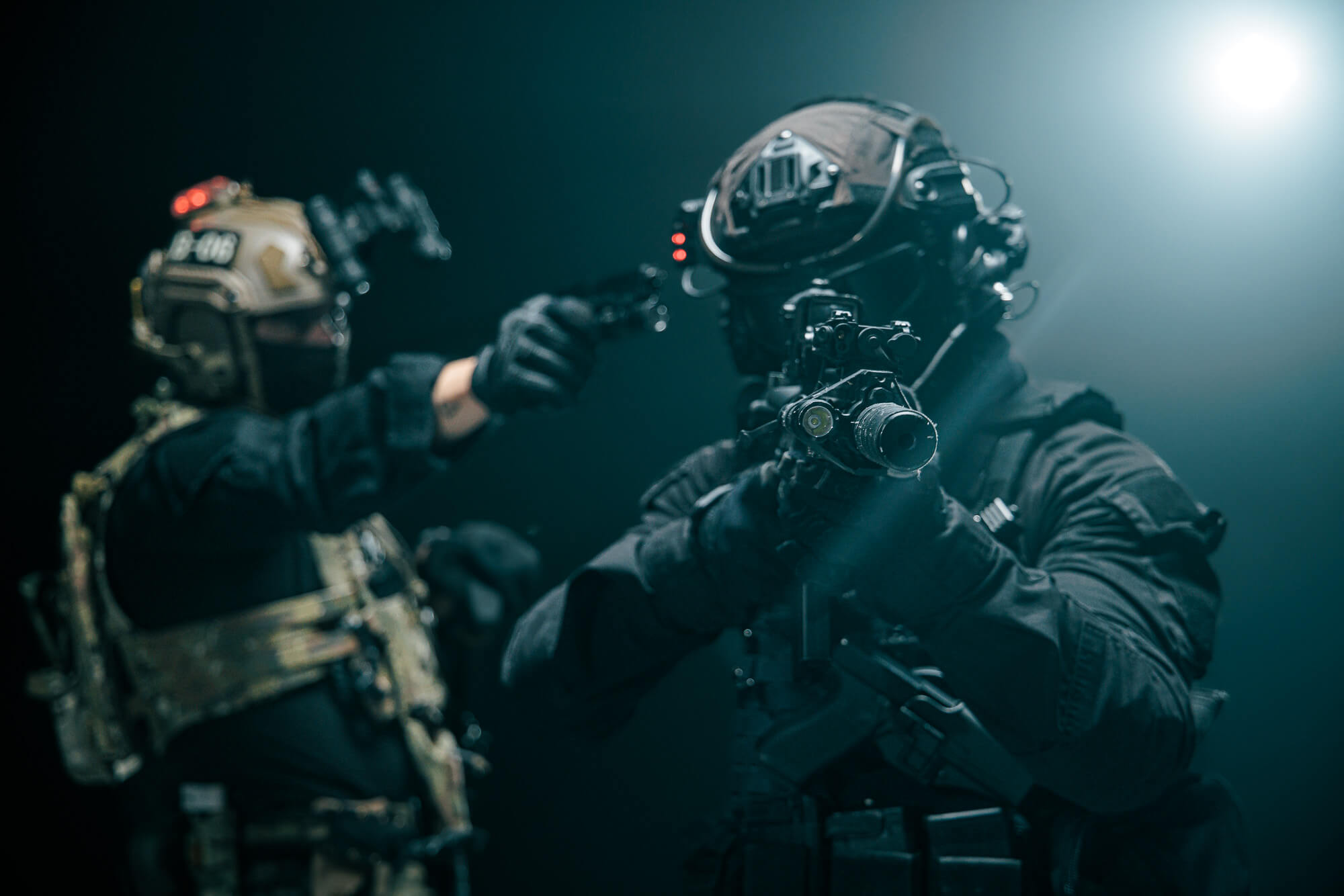
The visual direction used a restrained vocabulary: black backgrounds, steely tones, cold backlighting, small highlights and extensive shadow. Light does not describe the entire scene; it reveals fragments — a visor, silhouette, gaze or texture — and lets the viewer complete the rest.
Low angles reinforce the characters’ presence, while tight framing turns equipment and the body into graphic material. Smoke and light beams add depth without breaking the sense of a controlled space.
The result sits between editorial portraiture and entertainment key art: realistic in gesture and deliberately cinematic in treatment.
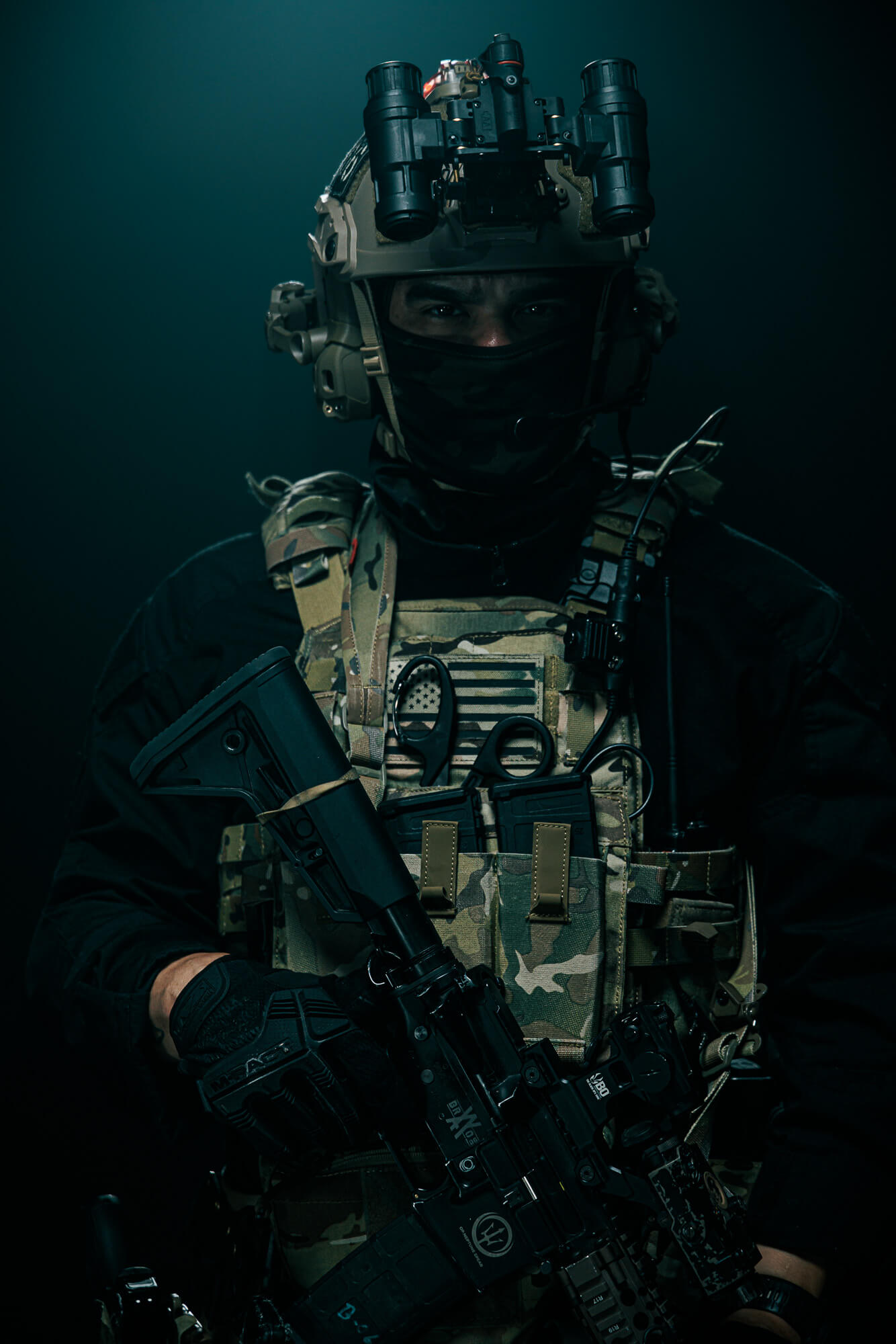
Unit portraits
Presence · Identity · Continuity
The craft
04 / Process
Credibility starts with gesture
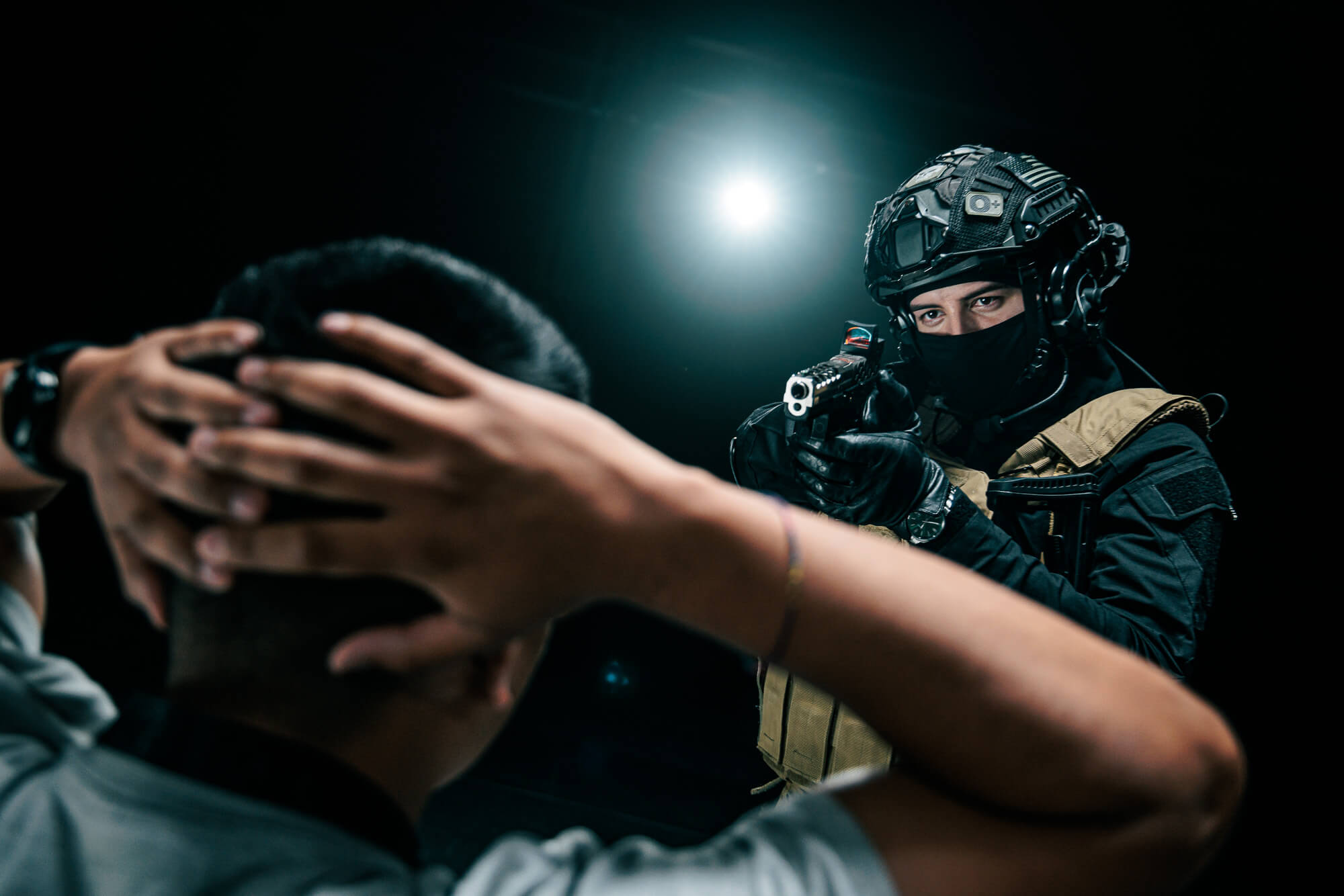
The cast brought something more important than appearance: physical understanding. How they held equipment, moved or looked off-camera helped each pose work as a narrative moment.
The session was produced on 297 Studio’s film set in Leganés, with Davinia Durán, Daniel Palma Arias and Miguel Freire as photography assistants.
Portraits, group compositions and action scenes share colour temperature, contrast and visual rhythm. Retouching by Jorge Millán and Davinia Durán unified that language and gave continuity to the Comando 297 universe.
- Gesto
- Physical understanding makes each pose convincing.
- Continuidad
- Group scenes, portraits and action share a colour temperature and visual rhythm.
- Editing
- The final treatment connects the images into a single series.
05 / Outcome
Visual fiction with an industry-level language
Black Ops turns a self-initiated project into a concrete demonstration of visual judgement. The strength of the series comes from the coherence between cast, light, staging, framing and editing, beyond the equipment or a recognisable aesthetic.
The project extends the portfolio into gaming and entertainment while remaining an unofficial concept. Comando 297 is an original fiction and proof that clear direction can make a previously imagined world visible.
- A coherent world
- Characters, light and visual treatment sustain the same fiction from beginning to end.
- An expandable series
- Portraits, action, group scenes and key art let the concept adapt to different formats.
- Demonstrated capability
- An original idea becomes a complete, recognisable photographic production.
Independent, unofficial concept project.
Next case · HypeCredits
- Photography and lighting
- Jorge Millán
- Retouching
- Jorge Millán · Davinia Durán
- Photography assistants
- Davinia Durán · Daniel Palma Arias · Miguel Freire
- Production and location
- 297 Studio · Film set, Leganés
Photography rights: Jorge Millán.
